


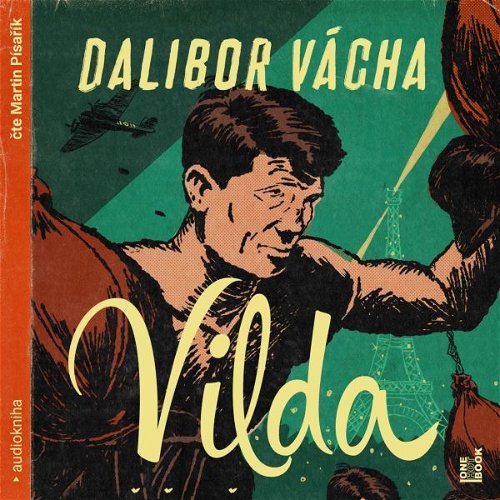


Portrait of the dancing elegant Vilda Jakš
You can be a hero even if your opponent doesn't show up in person. Count on Czech hands! Vilda Jakš, a boxing prodigy from a small village near Brno, despite his poor school record, developed into a celebrity that few sportsmen in young Czechoslovakia could match. Also thanks to special concessions during his military service at the airport in Kbely, he became the national champion in hang gliding for the first time in 1931. The reportage novel by Dalibor Vácha, the chronicler of the winding paths of our resistance, catches up with him in the spring of 1935, when he is in Paris training hard for the world's top match. Either he'll sweep the qualifiers set up between the ropes by the industry whizzes, either he'll beat the beater Thilo in the finals and ascend to Olympus, or he'll have to conquer it from elsewhere. Still, thanks to his connections, he manages to sell Czech glassware and pamper his mistresses, who circle around him like wasps. However, Munich and the Protectorate will come - and the Furiant patriot certainly does not intend to suffocate in it. He knows how to live in exile and spreads an infectious spirit around him, but in the ranks of the forming 311th Bombardment Squadron of the RAF, more is required. Take off into the ring with a cool head! And even though the moustachioed opponent from Berlin is obvious in this aerial battle, he didn't dare to appear in person, so Vilda has to box with himself to make the heroic transition...
"Portrait of the dancing elegance of Vilda Jakš" focuses in no small part on his time in the RAF. And the boxer's pre-war fate, very loosely processed in the film Fists in the Dark (1986) with Mark Vasut, is now stripped of the ideological admixture of the time.