



24-105? nie náhodou 24-70?
SONY 16-70mm f/4.0 ZA OSS SEL Vario-Tessar T
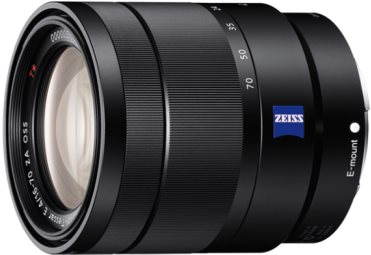
Lens bayonet Sony E, for APS-C, thread for 55 mm filters, autofocus, stabilization, weight: 308 g
Show full description
Code:
OS031a23
Producer's Website:
Don't like the alternatives? Choose from the full product list
- Help and manuals 1
- Specifications
- Photos & Videos 8
- Alternatives 8
- Accessories and suggested products

SONY 16-70mm f/4.0 ZA OSS SEL Vario-Tessar T
Discontinued
SONY 16-70mm f/4.0 ZA OSS SEL Vario-Tessar T
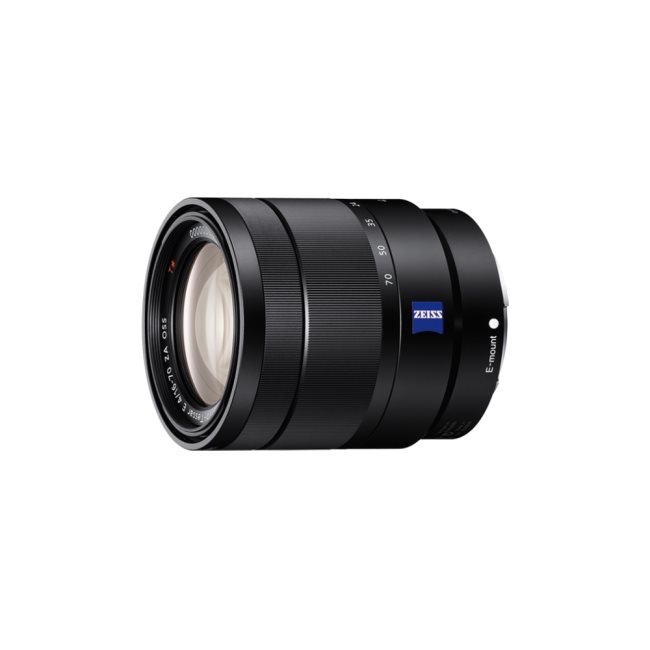
Experience top-notch photography courtesy of the SONY photography range. The SONY family has a new member: a high-quality lens with ZEISS Sonnar construction with T* coating, designed to eliminate lens flare, internal reflection, and light scattering. The lens is primarily compatible with APS-C sensor cameras with an E bayonet. With its minimum focus distance of 35cm and 0.23× magnification ratio, it is ideal for mid-range photography. Its maximum aperture is F/4, so you get high-quality images even in poor lighting. The lens provides a focal length of 16-70mm (Full-Frame) and 24-105mm (APS-C) respectively. This ensures that the resulting photos look natural and pleasing to the human eye. Due to its low weight of just 308g, the lens makes it easier for you to hold the camera in a stable position during shooting.
Advanced technology
To achieve the best image quality possible, the lens is equipped with 4 aspherical lens elements, one AA element, and one element made of ED glass. It is also equipped with SteadyShot optical stabilisation with active motion recording mode. Finally, an integral part of the lens is its circular aperture which helps achieve a beautiful blurred background effect.
Key features
- High-quality design
- Clean and crisp picture
- 4 aspherical lens elements, AA element, ED glass element
- SteadyShot optical stabilisation
- 4× zoom

The package contains a lens hood (ALC-SH127: flower, bayonet type), front and rear lens cap, and a case.
Additional information:
Focal distance:
16-70mm
35mm focal length equivalent (APS-C):
24-105mm
Number of elements/surfaces:
16/12
Viewing angle (APS-C):
83-23°
Number of aperture blades:
7
Maximum zoom ratio:
0.23×
Dimensions (W × D):
66.6 × 75mm
Weight:
308g
Specifications
Bayonet
Bayonet
Features
For sensor
Lens type
Focal length (From)
Focal length (To)
Maximum aperture
Filter diameter
Filter diameter
Functions
Function
Focusing type
Optical Lens Stabilisation
Dimensions
Length
Diameter
Weight
Weight
More Specifications

Sony Corporation is a Japanese company founded in 1946. Its headquarters is located in Tokyo. Its beginnings were humble. The first product sold under the Sony brand was a transistor radio. It was those radios that played a pivotal role in the company's expansion in the 1960s and the world quickly began to associate Sony products with a reliably stellar price-performance ratio.
In the 1970s, Sony was severely affected by the global economic crisis. Many analysts considered the company effectively defunct and could see no future for it. However, they underestimated the famous Japanese perseverance and courage. The crisis was not a disaster for Sony; on the contrary, it served as a launching pad to even greater heights. The company recovered and soon changed the media landscape with the development of the CD and later the DVD. In the early 1990s, Sony achieved another major success with the introduction of the PlayStation gaming console. It is the gaming consoles that best represent the intersection of the three key areas in which the company operates today – electronics, video games, and the entertainment industry.
Note:
Specifications can be changed without notice. Images are for illustrative purposes only.