


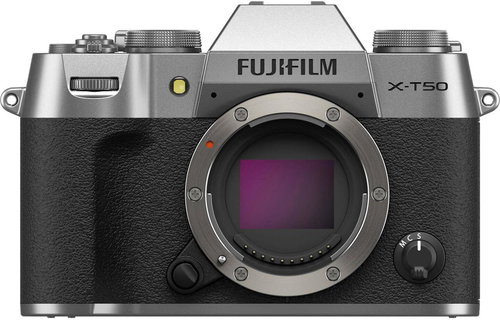
Fujifilm X-T50 body silver


 Installment calculator
4,9%
interest
from 36.43 € monthly
Installment calculator
4,9%
interest
from 36.43 € monthly

Fujifilm X-T50 body silver
Fujifilm X-T50 mirrorless camera body
Classic design, rounded shape
The combination of the latest sensor and processor, compact size and redesigned control scheme make the Fujifilm X-T50 a quality device for those looking for an easy-to-use camera. It features the same 40.2MP BSI APS-C sensor and X Processor 5 used in the flagship X-T5. With the Fujifilm X-T50, you don't have to sacrifice image quality, processing speed, or any of the advanced features offered by the likes of camera X100VI.

APS-C
Sensor size
40.2 Mpix
Sensor resolution
Fujifilm X
Bayonet
I. B. I. S.
Image stabilisation
SD / SDHC / SDXC
Memory card
Key features of the Fujifilm X-T50 digital camera, body, silver
- 4K and 6K high-definition video
- Tiltable 3.0" LCD touchscreen with 1.84 mil dot resolution
- Extended ISO 64-51200 shooting
- EVF OLED electronic viewfinder with 2.36 mil dot resolution
- Bluetooth, Wi-Fi, USB-C, micro HDMI, 3.5mm mini stereo
- Multiple exposure
- Built-in flash, external flash option
- Compact size and weight of only 438 g including battery and SD card

40.2Mpx APS-C X-Trans CMOS 5 HR sensor and X-processor 5
At the heart of the X-T50 is a 40.2MP fifth-generation X-Trans CMOS 5 HR sensor. Its combination with X-Processor 5 produces images rich in detail, provides optimized performance and reduces camera power consumption. Together, they deliver the highest image quality yet for the X-Series in a small, lightweight body. Thanks to an impressive autofocus algorithm and the use of artificial intelligence technology, this processor extends the range of recognizable subjects in the camera. Accurate tracking of animals, birds, vehicles and other objects is achieved, even in low light conditions.

Enhanced features
The FUJIFILM X-T50 features an impressive autofocus prediction algorithm that ensures reliable focusing even when shooting constantly moving subjects. The autofocus improvements are most noticeable in zone autofocus and low-contrast situations. The X-Trans CMOS 5 HR sensor has a more light-efficient pixel structure. The ISO 125 setting, which was only an advanced option on the previous X-T30 II, is now available natively on the FUJIFILM X-T50. The sensor also features an improved image processing algorithm that increases resolution without degrading noise levels.

7-stops Image Stabilisation IBIS and high video quality
The five-axis In-Body Image Stabilisation System (IBIS) can compensate for camera shake by up to 7 stops, allowing the photographer to achieve sharper images and video even at longer exposure times or when using longer lens focal lengths. The camera can record video at up to 6.2K resolution internally at 30p in 10-bit colour 4 : 2 : 2. 4K/60p and high-speed 1080/240p resolution is also available, maximizing video flexibility. AF-C mode with Wide/Tracking AF provides subject tracking during video recording by simply touching the subject on the rear LCD. The camera starts tracking the subject, even in situations where multiple subjects are in the frame. In addition to F-Log mode, the camera also supports F-Log2 mode, which can capture the dynamic range of a scene with shades from lightest to darkest by more than 13 stops.

Classic design, rounded body shape
The Fujifilm X-T50 digital camera inherits the design from the X-T series, reminiscent of a classic film camera. However, it uses a rounded body shape. It's slightly larger than the previous X-T30 II, but this more rounded shape makes it feel smaller without compromising handling. The "thumb rest" extends smoothly outwards compared to previous models, providing a better and more comfortable grip. It helps stabilize the camera and improves handling, especially when shooting in different positions or with heavier lenses. The compact body weighs just 438g, and combined with the sleek design and ergonomic design, it's a joy to use wherever your creative journey takes you.

Movie Simulation Selector
The Fujifilm X-T50 digital camera is the first X-series camera to feature an all-new film simulation dial on the top plate. It is thus optimized for users who want to quickly adjust the style of their images instead of scrolling through menus. The selector provides direct access to eight movie simulations, but there are also three positions that can be assigned simulations based on your preferences. The 20 film simulation modes, including the latest REALA ACE, take advantage of Fujifilm's colour knowledge (which it has been collecting since its founding in 1934) to digitally replicate the look of classic photographic film stock. Reproduce the classic colours and tones that Fujifilm is famous for, or add an artistic touch to your photographic journey.

Tiltable LCD display and other special features
The FUJIFILM X-T50 features a 1.84-megapixel rear flip-up LCD screen that offers greater versatility, especially when working at waist level. The combination of a tilting display and center viewfinder aligns the lens, camera and photographer on the optical axis, allowing for more convenient and intuitive image creation. White balance (AWB) has three modes: Auto, White Priority and Ambience Priority. When white priority is selected, the white colour will be reproduced as white under incandescent light. When Ambient Priority is set, scenes are photographed with ambient light characteristics. Multiple exposure allows you to stack up to nine images in Additive, Average, Comparative Bright or Comparative Dark modes to combine multiple perspectives or images from different times. In AUTO mode, the camera automatically detects and sets the optimal exposure setting for any scene. It also features an automatic subject detection function where the camera automatically detects and tracks the subject and keeps it in focus.
Specifications
Colour
Type and function
Sensor
Video
View-finder
Display
Dimensions and weight
Battery
Colour
Inputs and outputs
Package contents
Specifications can be changed without notice. Images are for illustrative purposes only.